01
Problem
Operational processes often live across spreadsheets, chat, manual approvals and disconnected systems, making ownership and status difficult to see.
 Bakr MostafaOPERATIONS · SOFTWARE · AILinkedIn ↗
Workflow-driven business systems designed around roles, approvals, data ownership, integrations and production usability.
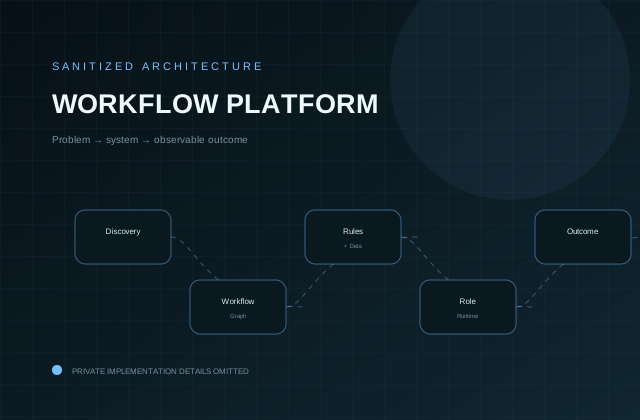
The diagram supports the explanation below. Important information is kept in readable HTML rather than embedded as tiny image text.
Operational processes often live across spreadsheets, chat, manual approvals and disconnected systems, making ownership and status difficult to see.
Real users need simple interfaces while the backend still has to handle roles, conditional flows, data integrity, reporting, auditability and integration with existing tools.
Model the operation explicitly: actors, states, records, transitions, evidence and permissions. Keep the user journey compact while pushing complexity into tested server-side rules and reusable workflow components.
Users + roles
  ↓
Workflow UI
  ↓
Domain rules / permissions
  ↓
PostgreSQL + integrations
  ↓
Events / reporting / audit
A repeatable engineering approach for turning loosely defined operations into structured, maintainable software without exposing internal client details.
Credentials, private infrastructure, proprietary mechanisms, internal prompts, customer-identifying data and implementation recipes are intentionally excluded. Architecture decisions, trade-offs and delivery reasoning can be discussed in an interview.
← Back to mission deck